
About us
Our passion is pushing boundaries with original ideas, adapting to the ever changing scientific and technological landscape.
Our story
Where we came from
Keymodule was founded in 2005 by Professor Peter Johnson to further develop software solutions arising from his University of Leeds research projects. His interest in software solutions for difficult chemistry problems had been triggered many decades ago by a stay in Nobel laureate E.J. Corey’s lab at Harvard University, where he worked on the LHASA project for synthesis planning. After joining the Chemistry department at the University of Leeds his research was split between organic synthesis and software solutions for a variety of problems in chemistry.

Where we are heading
Peter’s vision has inspired us at Keymodule to turn his ideas into high-performing, easy-to-use, versatile software solutions. We are particularly proud of our flagship solution, CLiDE, which was a trendsetter in chemical OCR and has now become the leading tool in the industry.
Our passion is pushing boundaries with original ideas, adapting to the ever changing scientific and technological landscape, and collaborating with our clients to meet their own individual needs and accelerate their breakthroughs. Because a win for you is a win for us.
Our passion is pushing boundaries with original ideas, adapting to the ever changing scientific and technological landscape, and collaborating with our clients to meet their own individual needs and accelerate their breakthroughs. Because a win for you is a win for us.
Who we are

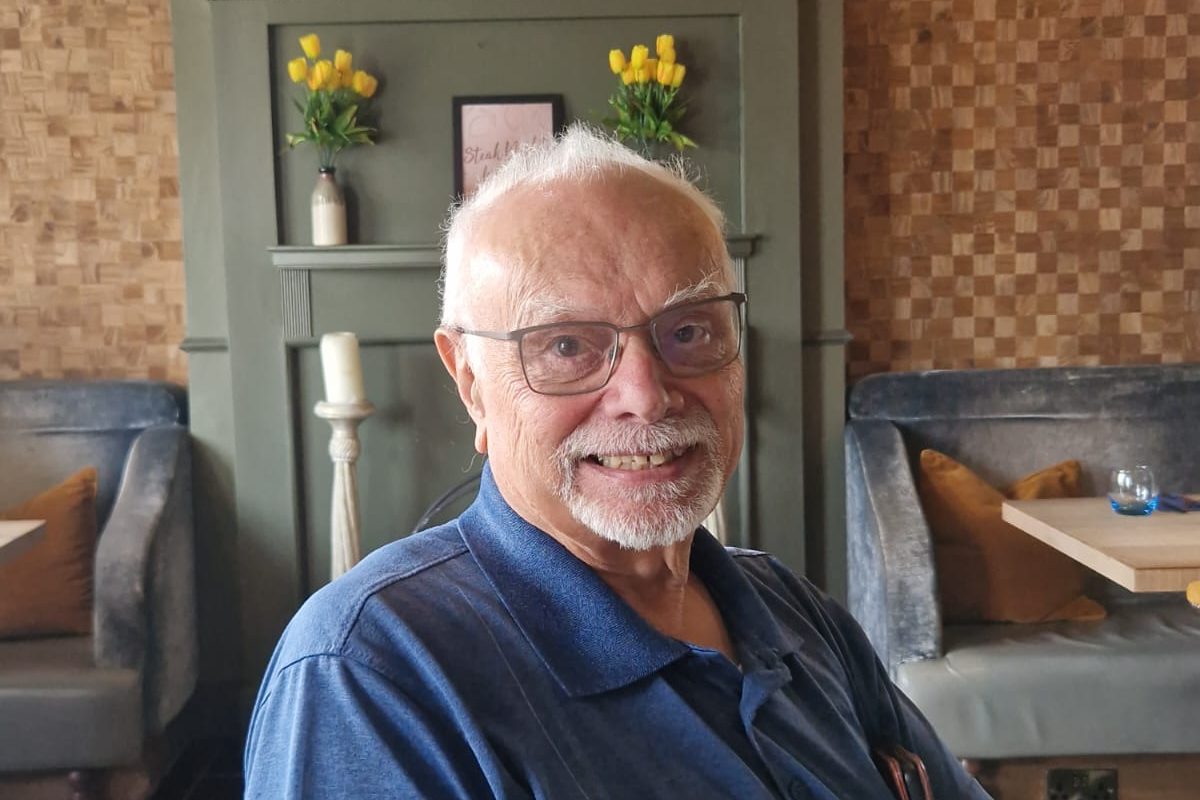
Prof. Peter Johnson
Managing Director and Scientific Advisor
Work in computational chemistry started with a collaboration with the Harvard group on the further development of the LHASA program for synthesis planning, and then branched out to a variety of completely different projects concerned with tools to aid early stage drug discovery, including tools for protein structure based hit discovery and optimization, synthetic accessibility and extraction of structural information from the chemical literature. The final University project was developed as part of the EU funded CHEM21 project concerned with the discovery of new green chemical processes for drug manufacture and resulted in the CHEM21 ELN, a new electronic notebook, designed to record in detail the experiments conducted by the experimental scientists in the consortium. The many outstanding co-workers in these projects have gone on to establish themselves as world leading chemoinformatics experts in various academic and industrial settings.
Peter was also a founding member of a number of companies who developed their own software solutions. These include LHASA Ltd, a not for profit company founded in 1983, which has since developed into the world leading provider of toxicity prediction software and now has more than 180 employees, ORAC (reaction storage and retrieval and the first to make use of reaction mapping), SYNOPSYS (chemistry spreadsheets), and SIMBIOSYS (eHiTS docking software and ARChem for synthesis planning, the latter now providing the foundation for the CAS retrosynthetic analysis system.

Aniko Valko, Ph.D.
Chief Technical Officer
Aniko leads our development team with a focus on quality, functionality and production. She manages our flagship product, CLiDE, and actively works on it as a developer. She knows CLiDE inside out and keeps pushing CLiDE to the next levels by coming up with exciting algorithms and software designs, whilst maintaining a high standard in their implementation.
In her free time, she enjoys spending time with her family and friends, and following a healthy and active life style.

Anthony Cook, Ph.D.
Chief Software Engineer

Simon Lyons, Ph.D.
Senior Developer
Simon joined Keymodule as a Senior Developer in June 2025 to work on the backend development of CLiDE.
Prior to this he was employed by ACS-I Nottingham; most recently working on the CAS Scifinder retrosynthesis engine developing solutions for stereo transformations. Simon gained a BSc in Chemistry and a PhD in Organometallics at the University of Nottingham between the years 1986-1994. After his formal study, Simon was taken on by Hampden Data Services (HDS) as a data inputter/assurer and started training as a programmer in 1996 (c and windows). HDS had a strong partnership with Chemical Abstracts Service (CAS) and this gradually became more important eventually leading to HDS merging into ACS-International. Simon feels his most enjoyable and productive times are when he is able to apply his chemistry domain knowledge to programming tasks. In his free time he enjoys spending time with his family, exploring the local area by bicycle, playing chess and reading.
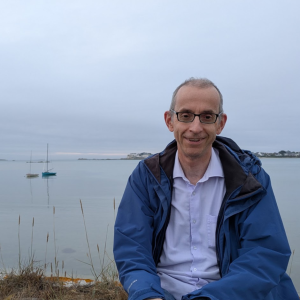
Jean-François Marchaland, Ph.D.
Senior Developer
Jean-Francois joined Keymodule in November 2026, which is a return of sorts: as a postdoctoral research fellow in Prof. Peter Johnson’s group at the University of Leeds between 1996 and 1999, he worked on the reaction parser for CLiDE and on VLSPROUT, a de novo design tool that docks virtual combinatorial libraries into proteins, the latter in collaboration with GlaxoSmithKline. He had come to Leeds from Strasbourg, where he gained a PhD in computer chemistry at Université Louis Pasteur in 1996, on AI methods for extracting synthetic knowledge from reaction databases.
He then spent sixteen years in commercial Java development, first at Press Association Sport, where he worked on the systems behind live sports data feeds to the BBC and Sky, and then at Rockshore, building telecoms middleware. In 2015 he returned to chemistry at Lhasa Limited, where over ten years he built the research team’s chemical structure and dataset registry and ran its GPU and HPC infrastructure. He finished there as Principal Applied AI Cheminformatician, developing machine-learning models for metabolism prediction. Since then he has been building AI pipelines that extract chemical structures and bioactivity data from papers and patents, latterly as a founding team member of Ixelis, a pre-funding start-up developing AI for in-silico toxicology.
Our values
Experience & knowledge
Innovation
We enjoy playing with new exciting ideas and creating novel algorithmic solutions.
We are certainly not fazed by challenging problems, in fact we love them. We have seen our solutions become unique and trendsetting in their area.
Quality & professionalism
We are passionate about delivering solutions that are accurate, reliable, efficient, versatile and easy-to-use.
This makes our solutions popular amongst our clients.
Customer experience
We are quick to respond to customers’ requests and questions. We thrive to resolve critical issues as quickly as possible, and are open to introduce new features upon request. We are keen to receive client feedback which is instrumental to drive the quality of our solutions and results.
Collaboration & reliability
We work with clients and partners on projects that are specific to their needs.
We always keep to our deadlines and provide clients with a detailed report on the development work done for any particular project.
Our partners



Special Offers
Exclusive limited-time pricing on software solutions. Accelerate your research with advanced solutions at unmatched value.